
Resources
Electrode Placement Guide
Learn how to position electrodes for your individual needs and get the best results with your Zappkit. This guide walks you through safe and effective placements for different areas of the body.
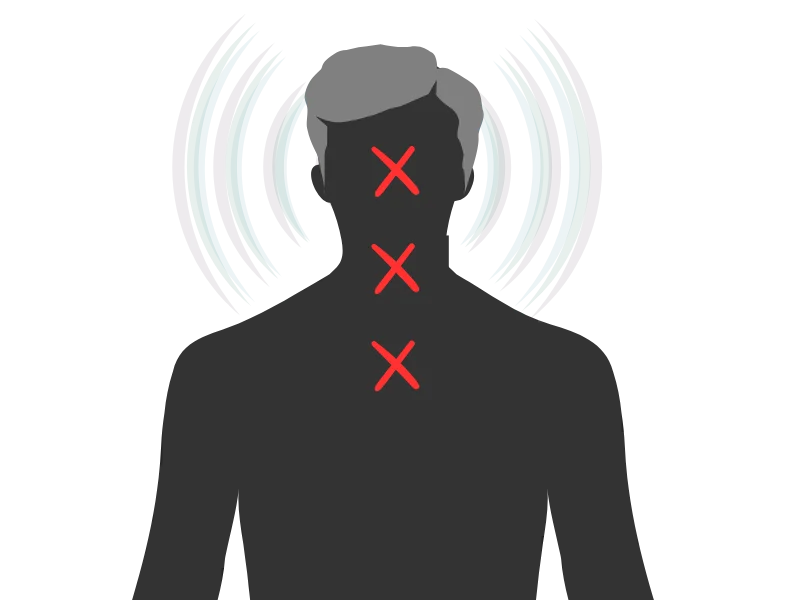
Important safety guidelines
- Never place electrodes on the head, face, neck, or spine.
- Do not use if you are pregnant or have a pacemaker.
Unlocking wellness through smart electrode placement
Every week, we hear from people who are curious about electrode (patch) placement. “Where should I place my patches for X issue?” It’s a great question, and one we love to explore, because the answer reveals something amazing about our bodies and their extraordinary design.
We’ve been researching and learning all we can to help you feel confident using your Zappkit. Along the way, we’ve found ourselves in awe of the body’s incredible systems — how they work together, support each other, and respond to simple adjustments in ways that can enhance your overall wellness.
In this guide, we’ll walk you through the logic behind electrode placement, share specific examples to target different systems, and show you how strategic placements can help you reach your wellness goals. From the respiratory and lymphatic systems to full-body support, you’ll discover how the right placements can create pathways that support your body’s natural energy flow and promote balance across multiple areas of your body.
Ready to learn how to unlock the potential of your Zappkit and gain a deeper understanding of your body’s design? Let’s dive in!
Electrode quick guide
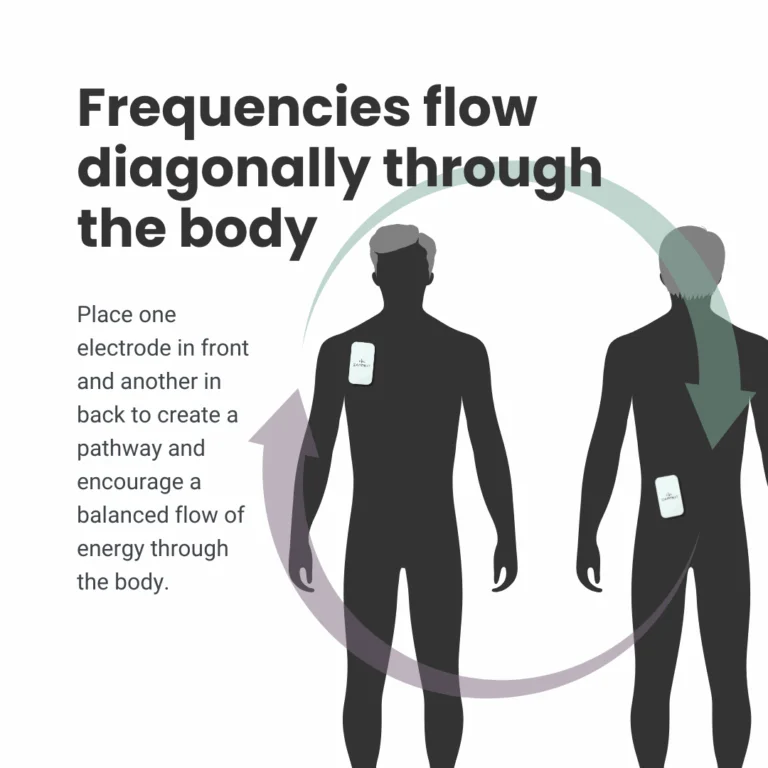
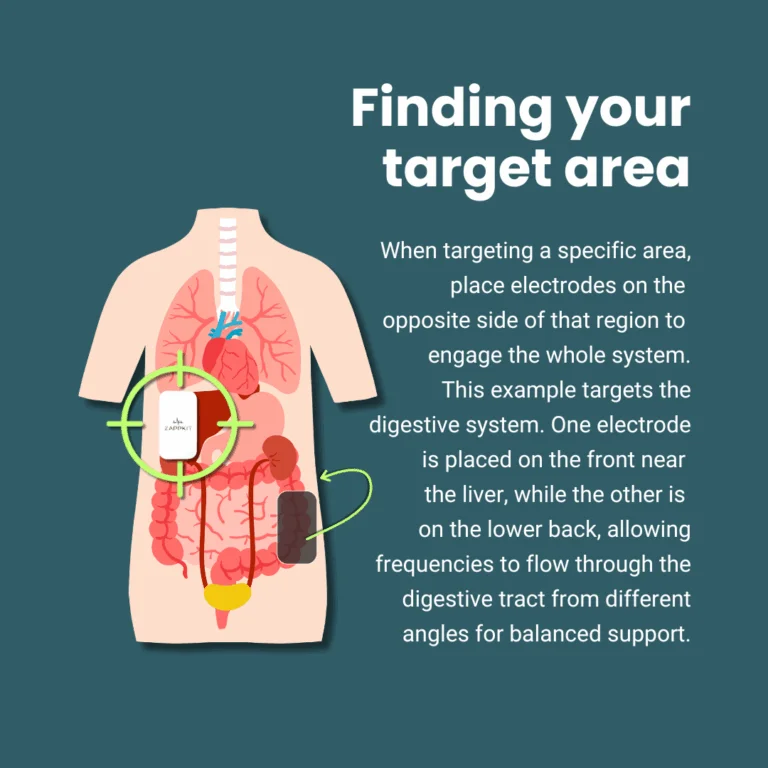
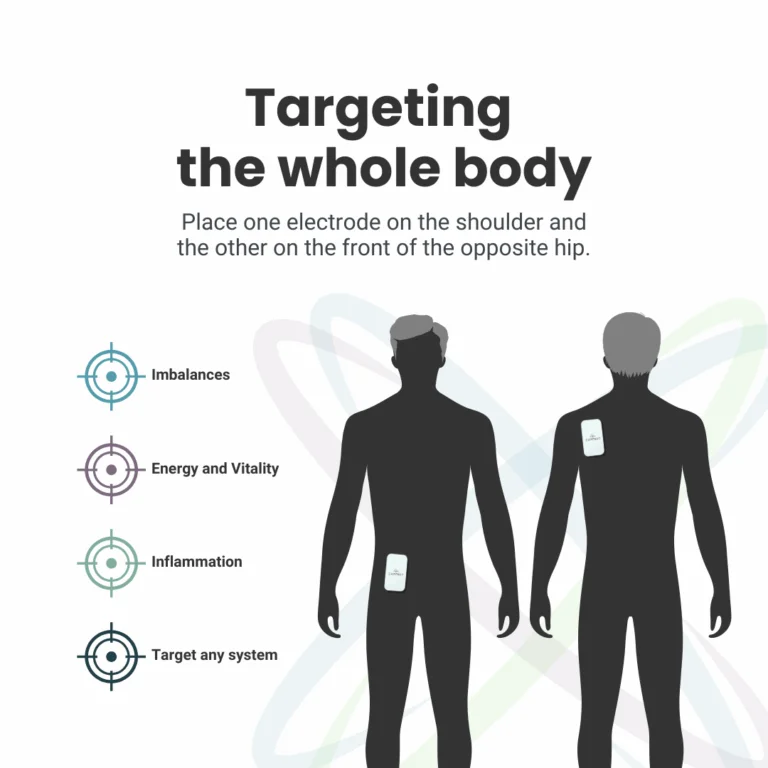
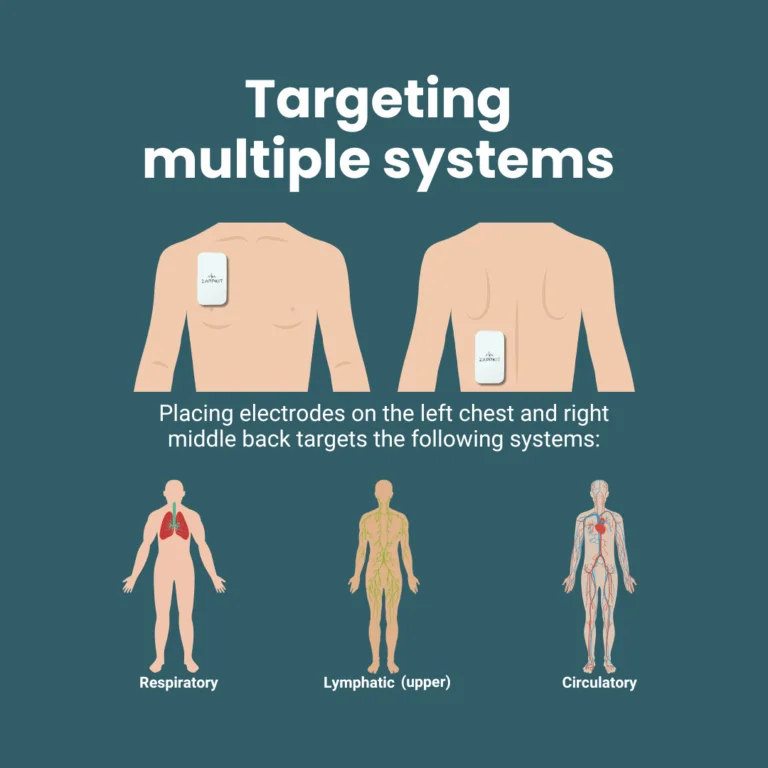
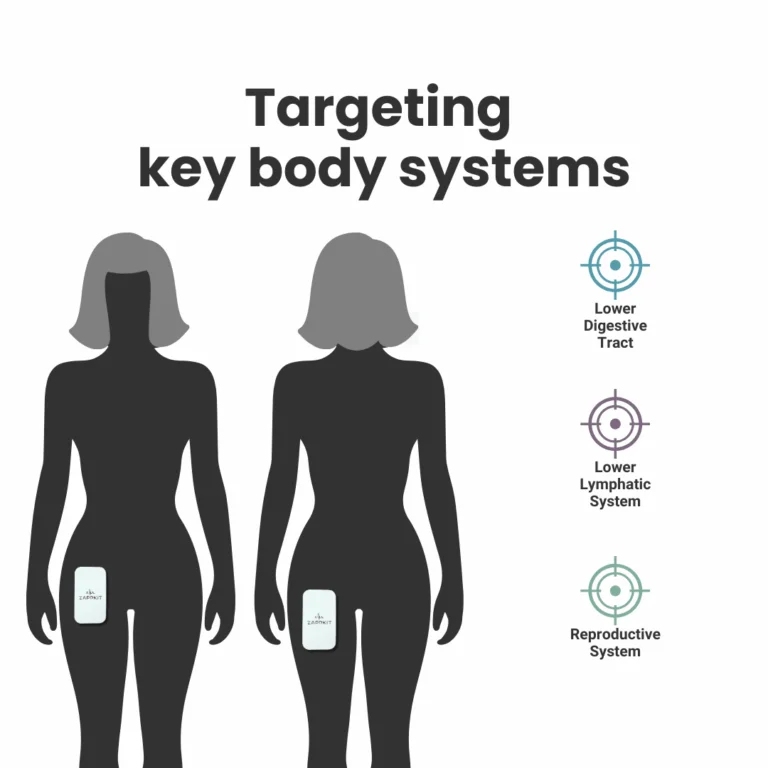
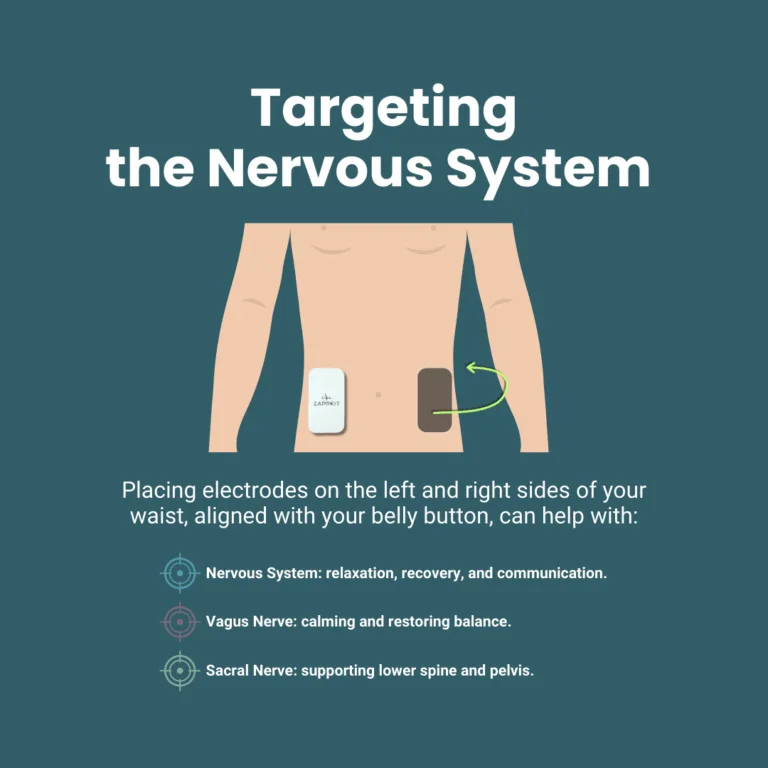
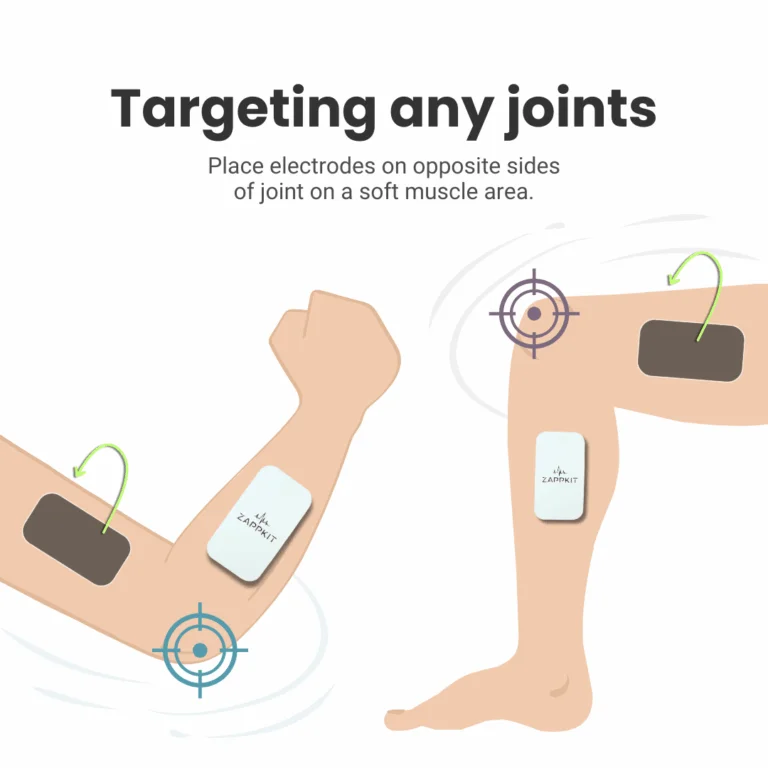
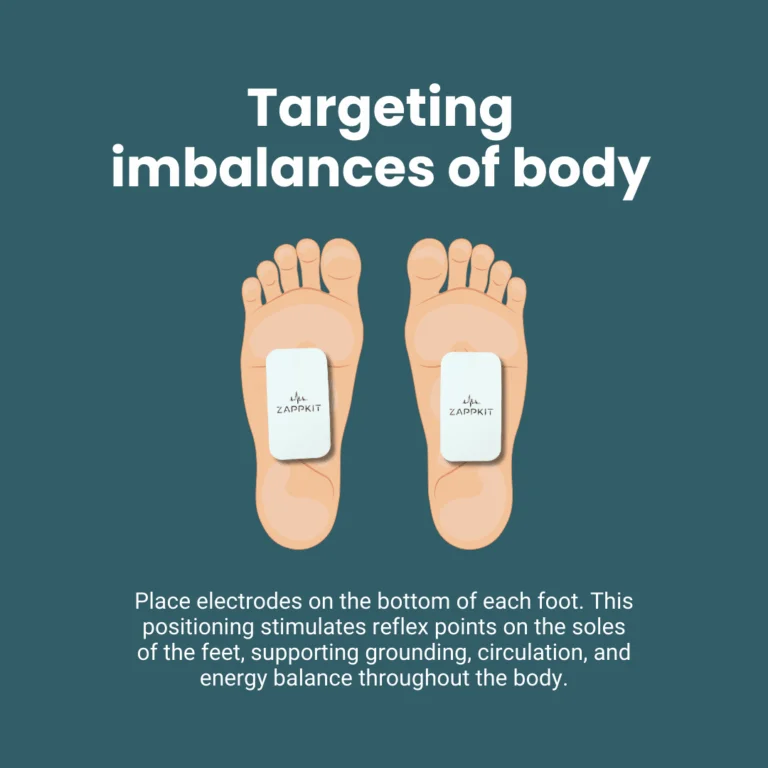
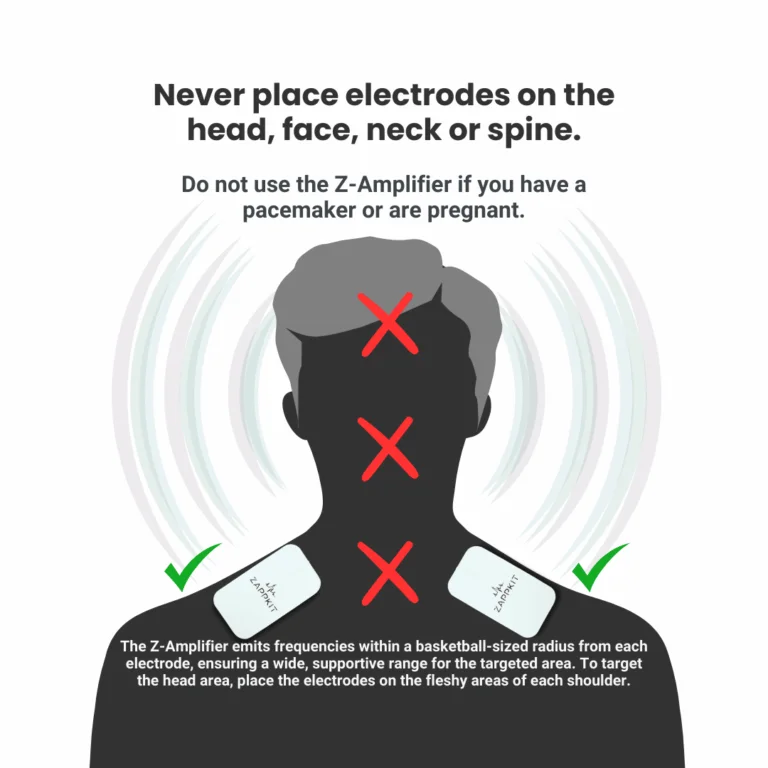
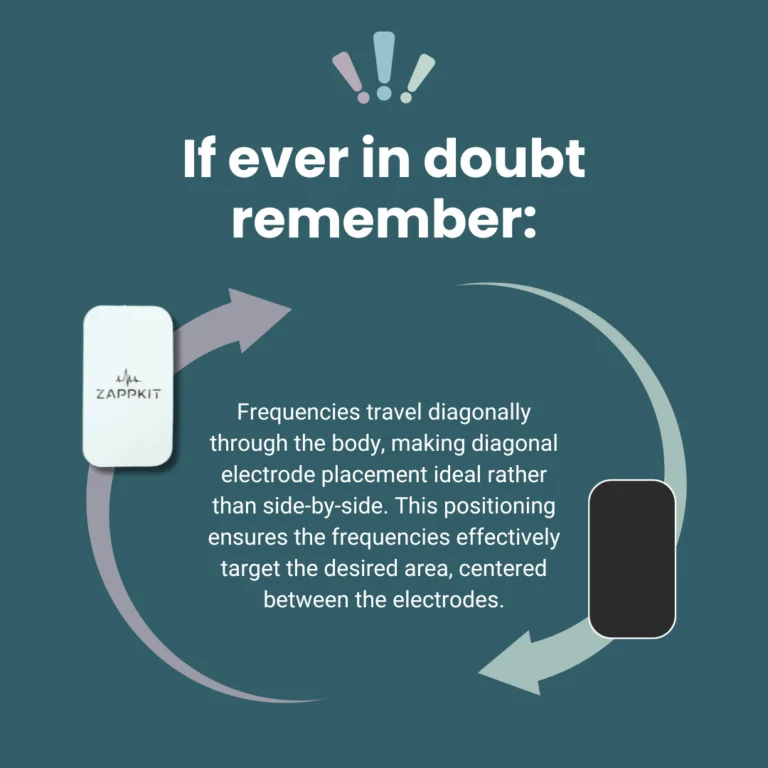
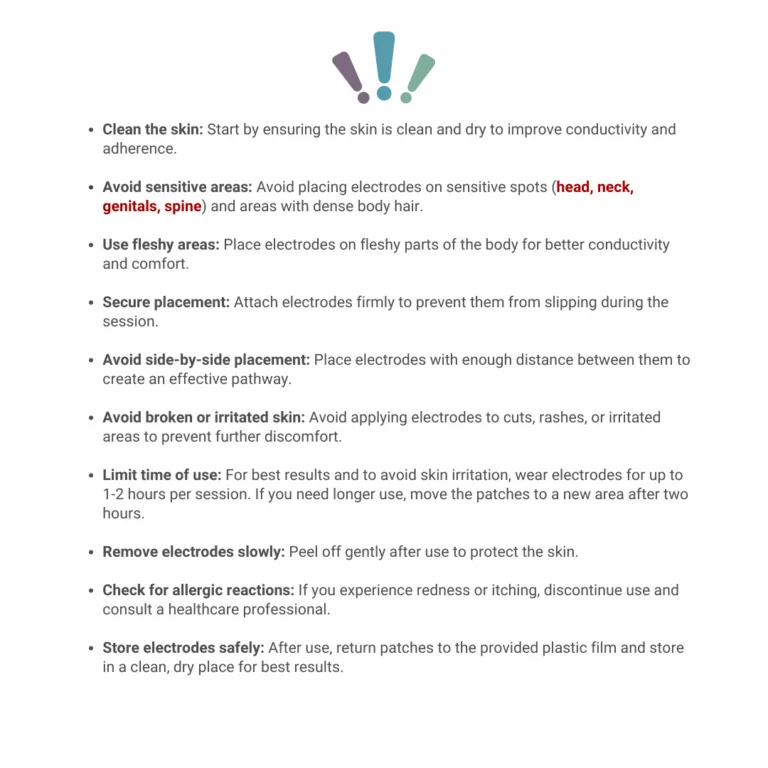
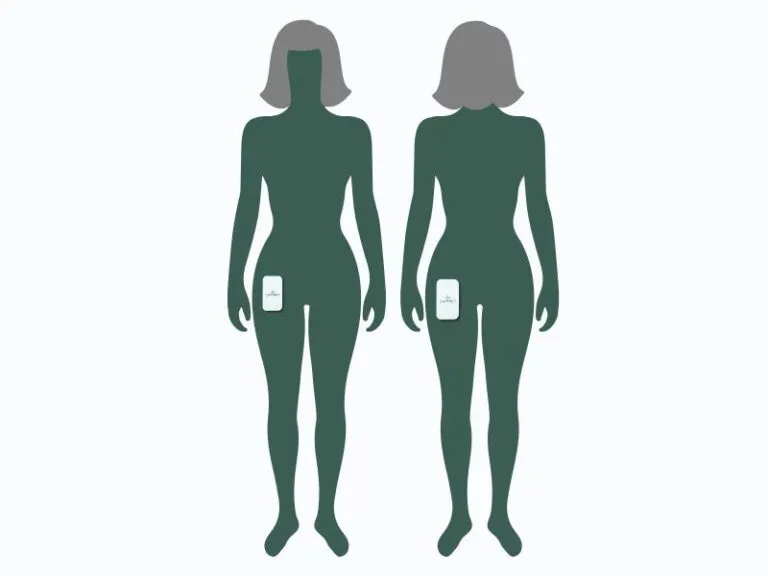
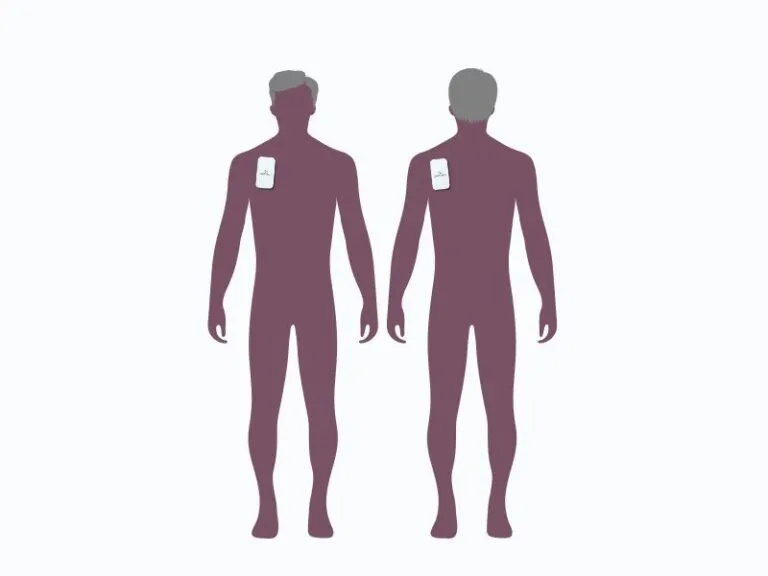
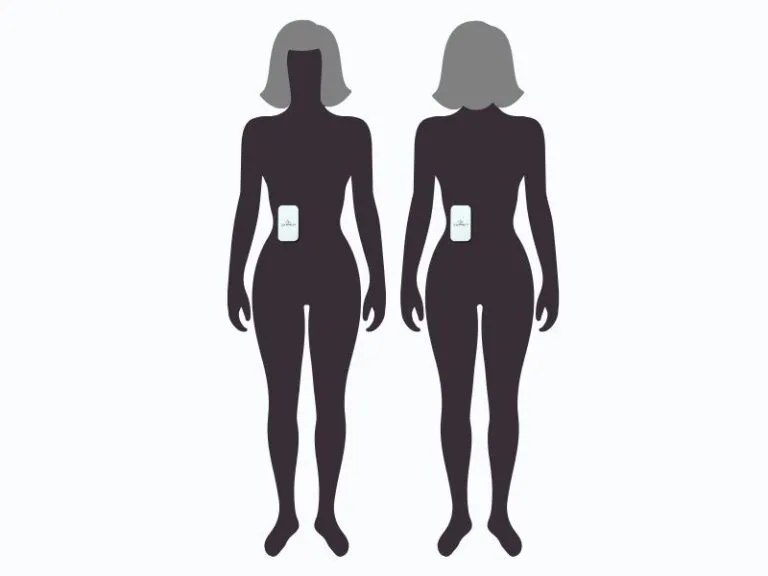
Examples of electrode placement
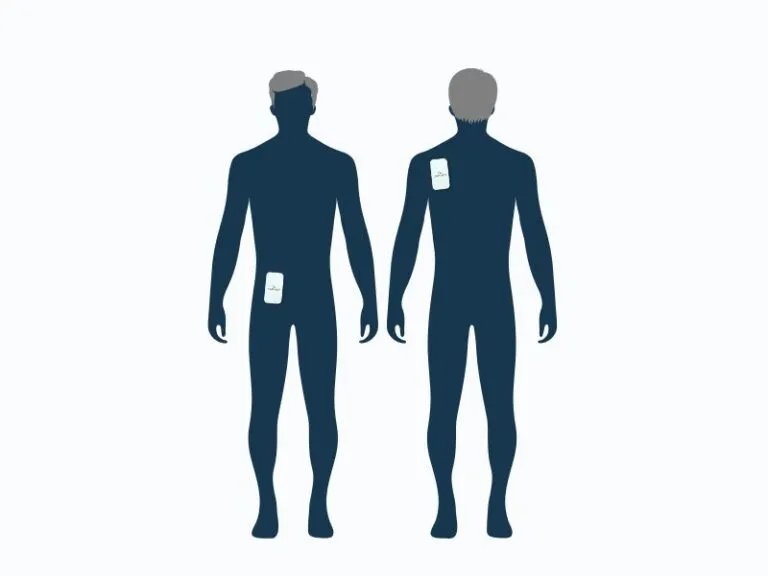

Quick tips
Effective electrode placement
A few practical tips to keep in mind as you place electrodes:
- Limit session time: for best results, limit sessions to 1–2 hours, and change the placement slightly if you use electrodes daily.
- Clean the skin: always start with clean, dry skin to help electrodes adhere and improve conductivity.
- Avoid sensitive areas: don’t place electrodes on sensitive spots like the head, neck, genitals, or directly on the spine.
- Choose fleshy areas: fleshy areas like the chest, abdomen, and thighs are better for comfort and conductivity than bony areas.
- Avoid side-by-side placement: placing electrodes side by side may limit frequency flow; try cross-body or front-back placements instead.

Creating pathways
Why opposite placement works
When you place electrodes on opposite sides of your body — one on the front and one on the back, or diagonally across your target area — you create a pathway that lets frequencies move through that area more effectively. It’s like a zip line: the energy can “ride” from one electrode to the other, covering the area in between for balanced support.
Learn more
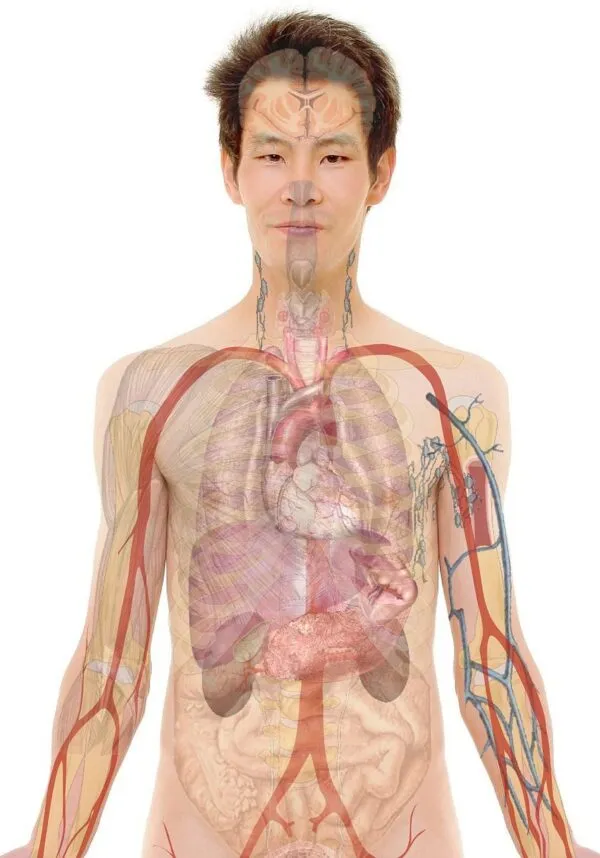
The body’s amazing interconnected systems
Our bodies are fascinating and complex! Each system is unique, yet no system works in isolation. They rely on each other to maintain balance and support overall wellness.
For example, the lymphatic system helps clear toxins and waste from tissues, which not only supports the immune system but also helps the circulatory system keep blood flowing freely. Similarly, the respiratory system supplies the oxygen that fuels each cell, supporting energy and function throughout the body.
Take a moment to explore each of your body’s systems below — open each one to learn about its role and key parts.
Circulatory system
- Role: the body’s transportation network. It pumps blood through the heart and vessels (your arteries and veins) to deliver oxygen and nutrients to cells and carry away waste products.
- Key parts: heart, arteries, veins, capillaries, and blood.
- Connection with other systems: works closely with the respiratory system (to deliver oxygen and remove carbon dioxide), the digestive system (to absorb and transport nutrients), the urinary system (to remove waste), and the immune system (transporting immune cells).
Respiratory system
- Role: lets us breathe in oxygen, which our cells need to create energy, and breathe out carbon dioxide, a waste product.
- Key parts: lungs, airways (trachea and bronchi), diaphragm, and nasal passages.
- Connection with other systems: works with the circulatory system to oxygenate blood and remove carbon dioxide, and with the nervous system to regulate breathing. Also involves the muscular system through the diaphragm, which controls breathing.
Digestive system
- Role: breaks food down into nutrients and energy our bodies can use, and removes waste the body doesn’t need.
- Key parts: mouth, esophagus, stomach, intestines (small and large), liver, pancreas, and gallbladder.
- Connection with other systems: supplies nutrients and energy to the circulatory system to nourish cells, works with the endocrine system to regulate digestion through hormones, and with the immune system in the gut to protect against pathogens.
Nervous system
- Role: the body’s control centre. It sends messages between the brain and the rest of the body, allowing us to move, think, feel, and react to what’s happening around us.
- Key parts: brain, spinal cord, and nerves.
- Connection with other systems: works with the muscular system to control movement, the endocrine system to regulate bodily functions, and the circulatory system, which supplies the brain and nerves with oxygen and nutrients.
Endocrine system
- Role: produces hormones — chemical messengers that regulate many of the body’s functions, including growth, metabolism, mood, and reproduction.
- Key parts: glands such as the thyroid and adrenal glands, the pancreas, and the reproductive organs.
- Connection with other systems: collaborates with the nervous system on processes like the stress response, works with the reproductive system on hormone regulation, and affects the digestive and muscular systems through metabolism and energy levels.
Lymphatic (immune) system
- Role: your body’s defence system, helping protect the body from infection and disease. It’s also the body’s drainage system, removing toxins, waste, and excess fluid from tissues.
- Key parts: lymph nodes, lymph vessels, spleen, tonsils, and lymph fluid.
- Connection with other systems: supports the circulatory system by draining excess fluid, works with the immune system to fight infection, and collaborates with the digestive system to absorb fats and other nutrients.
Muscular system
- Role: lets the body move, maintain posture, and produce heat. Muscles contract and relax to create movement.
- Key parts: skeletal muscles, smooth muscles (in organs), and cardiac muscle (heart).
- Connection with other systems: works with the skeletal system to enable movement, helps the circulatory system move blood, and depends on the nervous system for movement signals.
Skeletal system
- Role: provides structure, protects vital organs, allows movement in partnership with muscles, and produces blood cells.
- Key parts: bones, cartilage, ligaments, and joints.
- Connection with other systems: partners with the muscular system to allow movement, protects the brain and spinal cord of the nervous system, and works with the circulatory system to produce blood cells in the bone marrow.
Reproductive system
- Role: enables our bodies to produce offspring, including organs for reproduction and hormone production — and, in females, nurturing a developing baby in the womb.
- Key parts: in females, the ovaries, uterus, and fallopian tubes; in males, the testes and prostate gland.
- Connection with other systems: interacts with the endocrine system for hormone regulation, works with the circulatory system to supply the reproductive organs, and relies on the nervous system for reproductive function.
Urinary system
- Role: removes waste products and extra fluid from the blood, helping maintain a balance of water, salts, and minerals.
- Key parts: kidneys, ureters, bladder, and urethra.
- Connection with other systems: filters blood from the circulatory system to remove waste, works with the endocrine system to regulate fluid balance, and with the nervous system, which signals fluid balance.
Key takeaway: using electrode placement to target multiple systems helps provide better results.

Understanding
Multi-system targeting
One of the powerful aspects of electrode placement is that a single configuration can often reach several body systems. For instance, a cross-body placement on the upper torso doesn’t just affect one area — it can support various systems along the connected pathway.
Upper body placement example
Left chest (front) and right shoulder blade (back):
- Respiratory system: encourages frequency flow through the chest and upper back, targeting the lungs to support breathing and oxygen flow.
- Lymphatic system: the lymph nodes in the chest and under the arm benefit from increased circulation and drainage, promoting immune support.
- Circulatory system: reaches major blood vessels in the upper body, supporting circulation to the heart and lungs.
Using a single electrode placement to reach multiple systems gives you an efficient, whole-body approach to wellness.
Lower body placement for reproductive and digestive support
Moving to the lower body, electrode placement can help support reproductive, digestive, and lymphatic health.
Left side of the waistline (front) and lower right gluteus (back):
- Reproductive system: targets the pelvic area, which is beneficial for reproductive health.
- Digestive system: frequencies pass through the lower abdomen, supporting digestive health by encouraging movement and circulation in the intestines.
- Lymphatic system: the lymph nodes in the pelvis and groin benefit from improved drainage, which can support detoxification.
With one electrode on the waistline and the other diagonally on the opposite gluteus, you create a pathway that supports these lower-body systems from multiple angles.
Whole-body support with shoulder-to-hip placement
To target the entire body, place electrodes across the torso in a cross-body pathway from an upper to a lower region — a common setup is one electrode on the back shoulder and the other on the opposite hip.
Back shoulder and opposite hip:
- Circulatory system: this broad pathway can support circulation throughout the body, enhancing blood flow to multiple regions.
- Nervous system: a cross-body setup like this helps balance the nervous system, promoting relaxation and overall energy balance.
- Immune and lymphatic support: also reaches lymph nodes in the upper and lower body, encouraging full-body immune support and drainage.
This placement is ideal if you’re looking for a general wellness boost and want to reach multiple body systems with a single setup.

Conclusion
Knowledge is power on your wellness journey
Understanding how your body’s systems connect can help you make more intentional, informed choices on your wellness journey. When you’re dealing with chronic or challenging health issues, it can be exhausting and frustrating to feel limited by the symptoms. While we cannot promise or imply that these techniques will cure, treat, or diagnose any health concern, our hope is to offer insights that may inspire you on your path to wellness.
We encourage you to keep learning about your body — explore how your systems work together, discover new ways to support yourself, and recognise the signals your body sends you. Knowledge is empowering, and the more you understand, the more confident you can feel in making choices that benefit your well-being.
Our goal is to support you with information, but always consider seeking professional advice for a comprehensive and safe approach to your health. We’re here to help you find options that resonate with you, so you can approach your wellness with confidence, curiosity, and a holistic perspective.
Still unsure where to place electrodes?
Our support team is happy to help you find a placement that suits you.
Contact our support team