

Note: Note: This article references anatomical research from StatPearls (2025) describing fascia as a fluid connective tissue network connecting multiple body systems. Content is provided for educational purposes only and should not be considered medical advice. Zappkit and its employees do not diagnose, treat, cure, or prevent disease. You can read the full article here.
Most of us treat our bodies like a collection of independent parts. When your knee hurts, you look at your knee. When you have a stomach ache, you wonder if it was something you ate. We’ve been taught to see ourselves as a biological Lego set of 206 bones and 600 muscles acting as separate pieces clicked together.
But have you ever wondered why a tight shoulder can eventually lead to a tension headache? Or how stress can cause hives or other skin issues? The truth is, there is no such thing as an isolated body part.
Imagine you’re wearing a high-tech, seamless compression suit under your skin. It wraps around every muscle, cradles every organ, and even weaves through your bones. For decades doctors ignored this “stuffing,” but now we know it’s one of the most important organs you have.
Meet fascia: the living, liquid web that holds “You” together.
Fascia is a fluid-filled network of connective tissue that both holds your muscles and bones’ shape and acts as a massive communication system sending chemical signals and mechanical “pings” from your head to your toes in a fraction of a second. Today we are going to explore how this body-wide connective network interacts with major systems throughout the body, including the lymphatic and circulatory systems, the nervous system and brain, and even your immune system.
And of course, since we’re Zappkit, we’ll also explore how the Fascia sequence in the Z-App can fit into your wellness routine, including sequence pairings and electrode placement ideas to help you get started.
The Pump, the Trash, and the Night Shift
Unlike your blood, which has the heart to keep it moving, your *lymphatic system (your body’s waste-clearance crew) doesn’t have a central pump. It relies entirely on your movement. When your muscles contract (like when you walk or stretch), the fascia then squeezes the lymph vessels, pushing the fluid along. This is why you feel stiff after a long flight or a day at a desk. Your body’s “trash” is literally sitting still inside you.
This drainage system is so vital it even reaches into your brain. Think of your mind like a busy restaurant kitchen. During the day, it’s cooking at full speed, creating a mountain of “dirty dishes” (metabolic waste like proteins and lactic acid). If the “nightly cleaning crew” (the glymphatic system) doesn’t show up, or if the “drain pipes” in your neck and head fascia are clogged, those dirty dishes stay on the counter. The next morning, the kitchen can’t function properly. If your neck is stiff or your sleep is shallow, the wash cycle gets interrupted, and you wake up with that heavy, clouded feeling we call brain fog.
*Read more about the lymphatic system and Zappkit’s related frequency therapy sequences here.
Sequence Pairing
“Lymphatic System – Circulation and Drainage – Short” + “Fascia”
Electrode Placement
Upper body placement: Place one electrode on the left chest and the other on the right middle back.
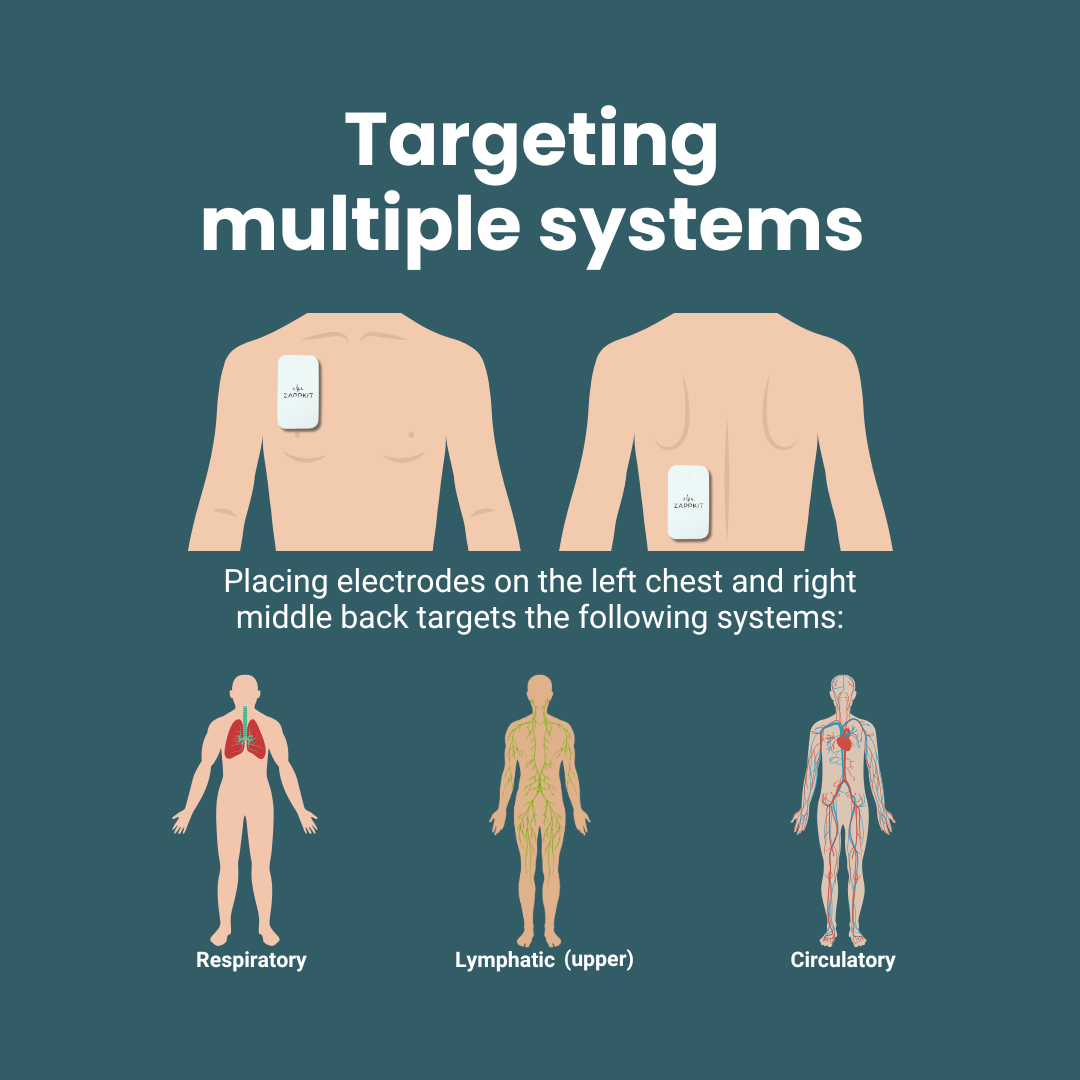
This placement runs through areas associated with the thoracic duct and upper lymphatic drainage, which are major collection pathways for lymph returning to circulation.
Fascia and the Nervous System Feedback Loop
Our fascia is incredibly adaptive, literally “gluing” itself into the shapes we take most often. Whether you are hunched over a laptop for eight hours, stuck in bed due to chronic illness, or physically bracing your body in response to past trauma, your fascia records that position. These positions we get stuck in cause your fascia to dehydrate and the fluid turns tightens and kinks up.
This causes the tissue to shrink and pull on your nerves. Your neurological system then sends a signal to the brain saying “Something is wrong.” The brain interprets this tension in your muscles as a form of danger, which then triggers a low-level stress response because, biologically, a creature that can’t move is a creature that is vulnerable.
So if you’ve ever wondered whether your stress is causing your tight shoulders or your tight shoulders are making you feel stressed, the answer is: Yes. Scientists have discovered a feedback loop between our emotions and our fascia. The good news? You don’t have to solve the “which came first” mystery to feel better. Because it’s a loop, you can interrupt it at any point. While it’s hard to force your mind to stop feeling stressed, it is much easier to physically un-kink your fascia.
By moving, stretching, or hydrating your fascial web, you change the signals being sent to your brain. You are essentially hacking the system by sending a physical “All Clear” signal from your body that forces your brain’s emotional centers to settle down. When you move your body, you aren’t just stretching a muscle; you are literally changing the mood of your nervous system.
Sequence Pairing
“Calming” + “Fascia”
Electrode Placement
Nervous System Placement: Place one electrode on the left side of your belly button, the other on the right middle back.
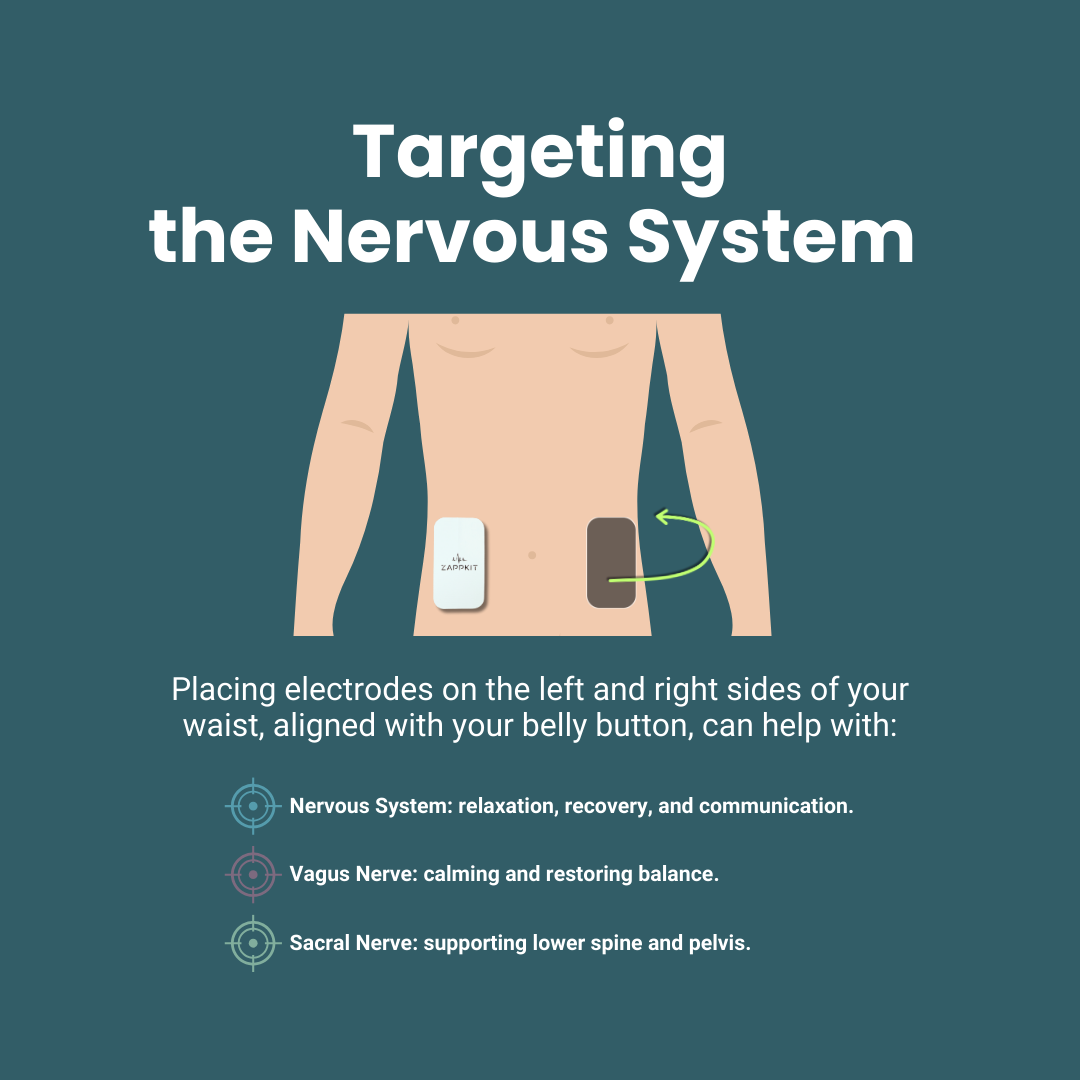
This placement creates a pathway that runs through areas associated with autonomic nervous system regulation, including the vagus nerve and abdominal nerve networks.
Fascia, Immunity, and Inflammation
Think of your fascia as the environment where your immune system lives and works. When your fascia is healthy and fluid, your immune cells can “patrol” your body easily. When you get a bug bite, an earache, or the flu, for example, your body sends out an immune patrol of sorts to handle the problem. These white blood cells and healing proteins travel through the tiny pipes (blood and lymph vessels) woven throughout your fascia. But if your fascia is kinked like a garden hose from lack of movement or stress, it creates a massive traffic jam. These immune paramedics can’t get to the site of the infection efficiently, and the waste-removal crew can’t get out.
This stagnant environment actually starts to damage the foundation of your body: your bones. Your immune system and your bones are constantly talking to each other, so a congested fascial system eventually starts to send out inflammatory distress signals that tell your body to start stealing minerals from your bones. This is one contributing factor to issues like osteoporosis. So when your fascial “roads” are clear and fluid, your body’s defense system is fast and efficient; when they are blocked, even your skeleton pays the price.
Another Painful Cycle
When inflammation hangs around too long, your body tries to reinforce the area by creating extra-thick, disorganized connective tissue. This is a process called fibrosis. It’s like your body is trying to create an internal scar to stabilize itself. Unfortunately, this new, thick tissue is incredibly sensitive— fascia actually contains more pain-sensors than your muscles do. This creates yet another frustrating loop: the stiffness causes inflammation, the inflammation causes more stiffness, and the increased sensitivity makes everything hurt more. This is why people with chronic conditions like fibromyalgia, diabetes, or even heart failure often feel pain, fatigue, and exhaustion. So when you stretch and move your body in any way you can, you are supporting the “slide and glide” of your fascia, thus dousing that inflammatory fire in your system.
Sequence Pairing
“Immune System Stimulation” + “Inflammation, general” + “Fascia”
Electrode Placement
Whole Body Placement: Place one electrode on the shoulder and the other on the front of the opposite hip (or vice versa).
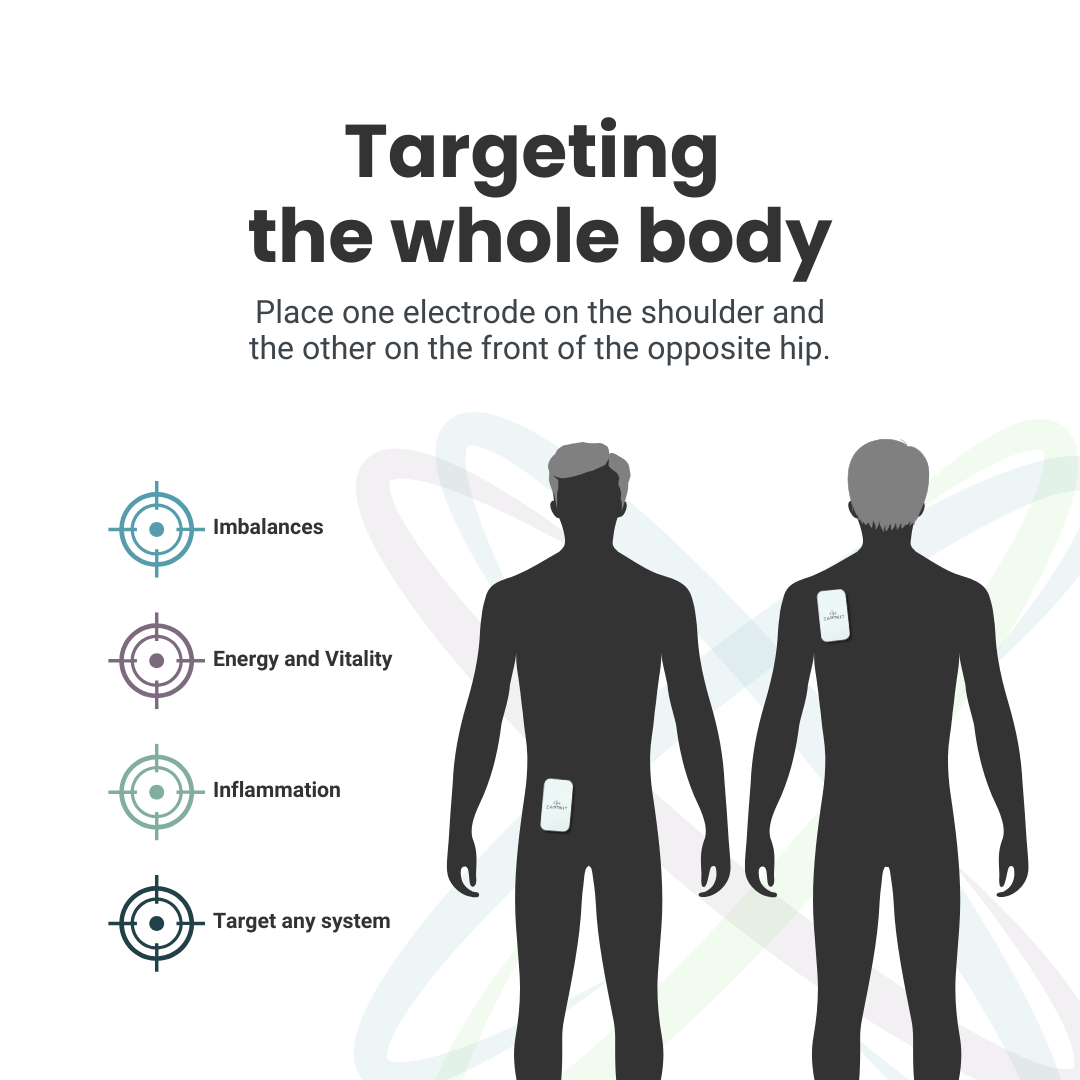
This placement supports broad, whole-body coverage by creating a diagonal pathway throughout the entire body, allowing the frequencies to move through major fascial and circulatory pathways rather than focusing on just one area.
Conclusion

So what does all of this mean?
It means you are far more than a complicated and fragile Lego set of separate parts. You’re more like a fascinating and intricately designed ecosystem. Your body is a living network where connective tissue, fluid movement, nerve signals, and immune activity are constantly interacting. Fascia is one of the structures that allows all of those systems to communicate and cooperate. When it stays fluid and mobile, the rest of the body has a much easier time doing what it was designed to do.
The beautiful thing is that supporting this network doesn’t have to be complicated. Any movement you’re capable of—whether it’s a long walk, gentle stretching, stepping away from your desk more often, or even running your Z-App—helps keep this connective network flowing and responsive.
So drink more water. Move your body in ways that feel good. Take more deep, cleansing breaths. Your body will thank you.